Matching Go! - Puzzle Games
- 4.7
- Rating
- 1.00M
- Installs
- Free
- Price

 Analysis by App-foxy
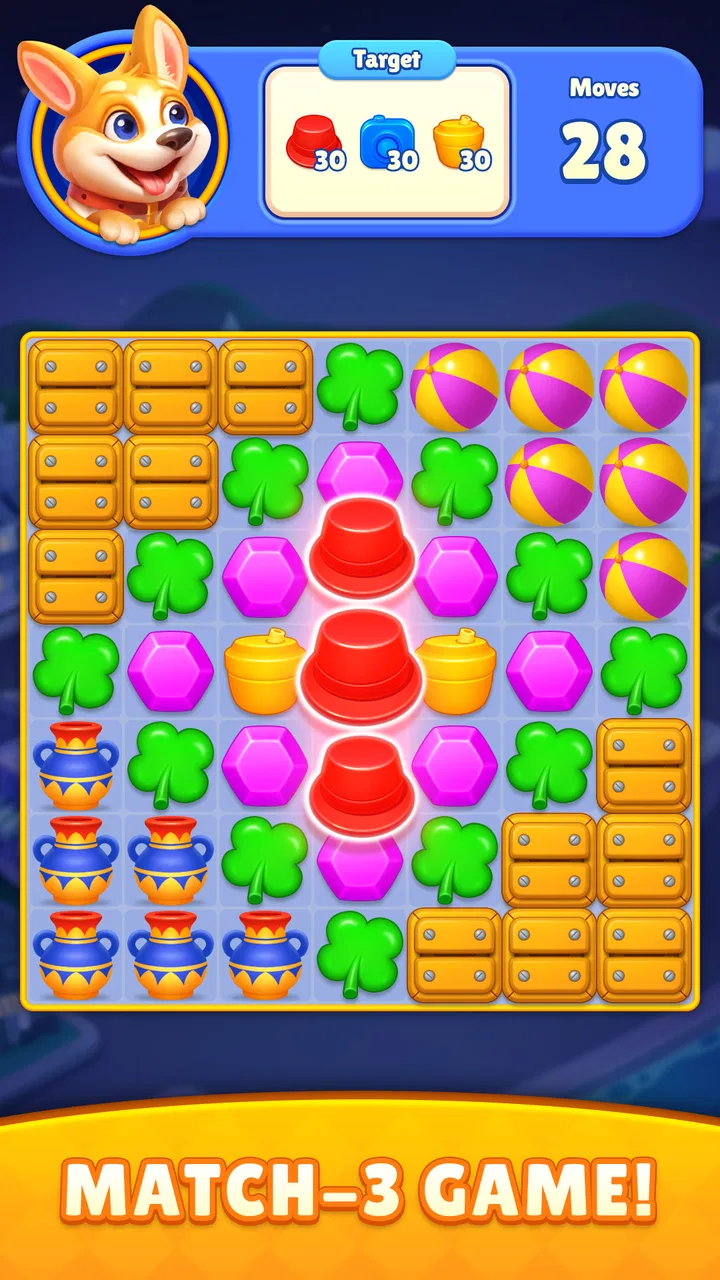
I picked up Matching Go! - Puzzle Games expecting a simple way to fill a few spare minutes, and that is exactly where it makes the best impression. It is a casual matching game from Lynn Mobile Puzzle Games, built around the easy-to-understand idea of clearing puzzles while moving through a world-travel theme. The appeal is immediate: there is no complicated setup, no long explanation before the first move, and no need to reserve a large block of time.
That simplicity is also the game’s main test. A matching puzzle can feel satisfying when the board gives you a clear goal and a steady sense of progress, but it can become forgettable if every round feels interchangeable. After spending time with it, I see Matching Go! as a pleasant companion for short breaks rather than a deep strategy game. Its strongest qualities are quick access, gentle pacing, and the ability to stop without feeling that I have abandoned a demanding session.
Why the first few minutes work so well
The opening experience is friendly because the basic action is familiar. You look for matching pieces, make a move, and watch the puzzle respond. That instant connection matters on a phone: I do not want to study a rulebook when I am waiting for an appointment or taking a short break between tasks. The travel framing gives the individual puzzles a broader sense of movement, so the game feels like more than an endless stack of disconnected boards.
You May Also Like

 Blood Strike: 2.5 Anniversary
Blood Strike’s Loadouts Turn Every Drop Into a Tactical Gamble
A close look at Blood Strike’s custom loadouts: how fast access to signature weapons reshapes its battle royale rhythm, rewards preparation, and narrows the gap between fights.

 Pandora - Music & Podcasts
Pandora’s Music Is Easy to Start, but Harder to Recover
Pandora’s strength is its low-effort path from a seed to a station. Its weak spot is how much confidence it asks you to place in connection, setup, and quiet recovery.

 8 Ball Pool
 Is Built on Rivalries, Rematches, and Routine
A close look at the rivalries, rematches, shared routines, and unanswered safety questions that turn a quick pool match into a persistent mobile community.

 Samsung Music
’s Quiet Strength Is Playing What You Already Own
Its reach comes less from spectacle than from dependable access to a personal library. That simplicity is both the app’s strongest retention engine and its ceiling.

 AccuWeather: Weather Radar
AccuWeather Review: A Quick, Clear Forecast for Everyday Decisions
For everyday plans, the best forecast is the one you can understand quickly. AccuWeather makes rain timing, radar, and local conditions easy to act on, with a few trade-offs.

 Hill Climb Racing
Why Hill Climb Racing Still Turns Crashes Into One More Run
A tiny car, a bumpy hill and one more upgrade: Hill Climb Racing keeps resurfacing because its simple chaos makes every near-miss feel personal.
More From Our News Desk
View All News


I also appreciate that the concept is accessible to a wide audience. The game is rated Everyone, which fits its relaxed presentation and uncomplicated premise. Someone who rarely plays mobile games can understand the objective quickly, while a regular puzzle player can begin experimenting with better choices instead of learning controls. The minimum operating-system requirement is Android 7.0, so the entry point is reasonably broad for people using older compatible phones.
The first useful habit is to resist making the most obvious match immediately. In a matching game, the visible move is not always the best move. I found it more rewarding to scan the whole board first, check whether a move opens another possibility, and then commit. This small pause changes the experience from random tapping into light planning without making the game feel heavy.
That balance is important. Matching Go! does not ask me to become a puzzle specialist before I can enjoy it, but it gives me enough room to improve my choices. If I am tired, I can play instinctively. If I want a little more involvement, I can look for chain reactions, protect useful spaces, and avoid spending a promising arrangement too early. The game’s casual identity comes from keeping that decision-making approachable.
The store summary presents the game as a combination of matching, building, and exploration. In practice, I would describe the pleasure as a loop of solving a compact challenge and feeling that the wider journey has moved forward. That framing is more effective than a purely abstract puzzle menu because it gives each success a little context. I am not only clearing another board; I am continuing a light trip through the game’s world.
A rhythm that suits interrupted play
My favorite way to use the game is in short sessions. It fits the moments when I have enough attention for a puzzle but not enough time for a long story, a competitive match, or a game that punishes me for leaving. I can start with a clear intention to play briefly, complete a challenge, and put the phone down. That makes it a good choice for commuting, waiting rooms, coffee breaks, or the few minutes before bed.
The important distinction is that the game feels useful even when I do not have a long uninterrupted stretch. Many mobile titles are technically playable in short bursts but emotionally push me to continue. Matching Go! is more comfortable when treated as a small daily activity. The pleasure comes from solving something now, not from needing to reach a major milestone before the session feels worthwhile.
For an everyday example, I can imagine opening it while waiting for a friend who is running late. I have enough time to focus on a board, but I may need to lock the phone suddenly when the friend arrives. A puzzle game with a complicated live event or a long battle would create pressure. This one is better suited to that uncertainty because its core appeal is contained in the individual challenge.
There is a trade-off here. Short-session clarity does not automatically mean endless variety. If I play for a long stretch, the matching structure becomes more noticeable, and the travel layer cannot completely disguise repetition. I would not choose it for an evening when I want a large, constantly changing adventure. Its design is more convincing when I judge it by how well it fills small gaps in the day.
One practical tip is to decide before opening it whether I want relaxation or optimization. For relaxation, I make the first sensible move and enjoy the visual response. For optimization, I take a moment to map possible matches before touching the board. Switching between those two approaches keeps the game from becoming too demanding while still giving experienced puzzle players a reason to pay attention.
Stopping and returning without losing the mood
Interruption tolerance is one of the most valuable qualities in a casual phone game, and this is where Matching Go! makes sense as a daily pick. I can treat a round as a self-contained activity instead of entering a commitment that requires constant concentration. That does not mean every interruption is automatically harmless in every situation, so I still prefer to finish a move before switching apps, but the overall format is forgiving enough for ordinary stop-and-start use.
This matters more than it may seem. A game can have attractive puzzles and still be a poor companion if returning after a break feels confusing. Here, the basic matching idea remains easy to recover. I do not need to remember a complicated control scheme or a long sequence of story details to understand what I am doing again. That makes it suitable for people who play sporadically rather than every day.
I would especially recommend it to someone who wants a low-pressure alternative to competitive puzzle games. There is no need to compare my performance with another player in the moment, and the world-travel theme gives the session a gentle sense of direction without turning it into a race. For a parent, commuter, or office worker who may be called away at any time, that lack of pressure is a real advantage.
Still, I would not confuse low pressure with limitless patience. If a player prefers games that remember every detail of a complex campaign, offer constant narrative surprises, or create a strong reason to return at a precise time, this is probably not the right fit. Its return value comes from convenience and gradual progress, not from a dramatic cliffhanger or a demanding schedule.
Another useful approach is to use the game as a mental reset rather than as a reward system. I found that one or two puzzles can provide a cleaner break than scrolling through an endless social feed, because the board gives my attention one small problem to solve. Once the challenge is complete, I have a natural stopping point. That structure is a quiet strength, especially for anyone trying to make phone time feel more intentional.
Where repetition helps and where it starts to show
Matching games live or die by repetition. The same basic action must remain pleasant long after the novelty of the first session disappears. Matching Go! handles this reasonably well through its combination of puzzle solving and travel progression, but the underlying activity remains familiar. I enjoyed the dependable rhythm, although I also noticed that the game is better at providing comfort than surprise.
That is not necessarily a flaw. Repetition can be exactly what a casual player wants. When I open the game after a tiring day, I do not always want to learn a new system. I may prefer a recognizable pattern that lets me settle in immediately. The best use case is someone who values reliable, bite-sized entertainment over constant mechanical reinvention.
The world-travel idea helps by giving the puzzles a sense of destination. Even a light progression layer can make repeated boards feel connected, because the player has a reason to see the next stage. I found that this works best when I focus on the journey as a sequence of small accomplishments rather than expecting it to transform the game into a full adventure title.
Players who need a new surprise every few minutes may become less enthusiastic. Compared with a larger puzzle collection that changes its rules frequently, Matching Go! offers a narrower experience. Compared with a competitive match-three game, it feels calmer and less focused on speed or rivalry. Compared with a purely decorative travel game, it gives me more to do moment by moment. Its position is between those alternatives: accessible puzzle repetition wrapped in a light exploratory frame.
My advice is to play in measured doses if you are sensitive to repetition. A short session preserves the pleasant part of the loop, while a very long session can make the structure feel more mechanical. This is one of the non-obvious trade-offs of the game: limiting playtime can actually improve the impression of variety because I return before the core rhythm becomes tiring.
It is also worth paying attention to how I approach difficult boards. Instead of tapping quickly and hoping the board resolves itself, I look for moves that preserve future options. That habit gives repeated puzzles a small layer of personal improvement. The game does not need to become a serious brain-training tool for this to matter; simply making fewer careless moves can make familiar rounds feel more engaging.
Free access, optional spending, and the right expectations
Matching Go! is free to download, which makes it easy to try without making an immediate commitment. There are in-app purchases ranging from $0.99 to $99.99 per item, so I would approach the game with a clear spending boundary before getting comfortable with its loop. The free entry is useful for testing whether the matching rhythm and travel presentation suit me, while the purchase range means I should not tap through payment prompts casually.
For me, the sensible way to evaluate it is to play first and decide later whether any optional purchase genuinely improves my experience. A casual game should not become an automatic expense simply because I enjoy its short sessions. I would recommend using the free version as a trial of the actual routine: open it during a normal break, stop when the break ends, and see whether I want to return without feeling pushed.
This is also where the game may not suit every player. Anyone looking for a completely purchase-free experience should inspect the in-game presentation carefully before settling in. A person who dislikes any possibility of optional spending may be happier with a paid puzzle game that offers its full structure upfront. On the other hand, someone who wants a free starting point and is comfortable making selective purchases may find the model acceptable.
The game’s current version is 2.1.9, and it has already attracted over one hundred thousand installs. Its average rating is 4.8 from around one and a half thousand ratings, with roughly one hundred twenty written reviews. Those figures suggest that the accessible formula is connecting with its audience, but I would still treat popularity as a starting signal rather than a substitute for personal fit. A highly rated casual game can remain wrong for someone who wants deep strategy or a completely different pace.
The developer, Lynn Mobile Puzzle Games, has chosen a focused concept rather than trying to combine every mobile genre at once. That focus helps the game communicate quickly. I know what kind of attention it wants from me: enough to inspect a board and make thoughtful matches, but not so much that a brief interruption ruins the whole experience.
Who will enjoy it most
I would recommend Matching Go! to players who want a friendly puzzle game for short, repeatable sessions. It is particularly suitable if you enjoy matching mechanics, prefer relaxed progression to competition, and like the idea of moving through a travel-themed setting while solving boards. It also works for people who are new to mobile games because the central interaction is easy to understand without sacrificing every possibility for better decision-making.
It can also be a good choice for families looking for an Everyone-rated game that does not demand a long explanation. A younger or less experienced player can begin with the obvious matching choices, while an older player can discuss planning and board awareness. I would still encourage adults to keep an eye on optional purchases, especially when a device is shared.
I would skip it if my priority were complex strategy, a rich story, competitive rankings, or a constantly changing set of rules. I would also look elsewhere if I wanted a game that feels substantially different every time I open it. A dedicated logic-puzzle collection may offer more variety in challenge types, while a competitive match-three title may provide stronger urgency and mastery for players who enjoy pressure.
The most accurate recommendation is therefore conditional: choose it for convenience, clarity, and a gentle matching routine; skip it for depth, intensity, or dramatic novelty. That distinction helped me enjoy it more because I stopped expecting it to be something larger than it is.
My casual verdict after settling into the loop
After using Matching Go! as a short-break game, I think its best feature is not a spectacular individual mechanic but the way its pieces fit together. The matching puzzles are approachable, the travel framing gives progress a little meaning, and the overall experience is easy to pick up again after putting the phone away. It delivers immediate pleasure without demanding that every session become a major event.
The right way to enjoy it is in small, intentional sessions. That keeps the game’s responsive matching loop pleasant and prevents the repeated structure from becoming too obvious. I also recommend scanning the board before moving, setting a personal spending limit, and judging the game by how it fits real breaks rather than by how long it can occupy an entire evening.
With a 4.8 average and more than one hundred thousand installs, it has clearly found an audience, and I understand why. It is a free casual game with an approachable premise, an Everyone rating, and a presentation designed around easy progress. The version available now is 2.1.9, and Android users on 7.0 or later can consider it if their phone meets that requirement.
My final recommendation is positive but specific. I would suggest Matching Go! - Puzzle Games to a friend who wants a calm matching game for waiting, commuting, or winding down, especially if they enjoy light exploration around their puzzles. I would not recommend it as a replacement for a deep strategy game or a high-energy competitive alternative. As a compact companion for interrupted play, though, it understands its role well: open it quickly, solve something satisfying, and leave without feeling that the game owns the rest of your time.
FAQs for Matching Go! - Puzzle Games
01What is Matching Go! - Puzzle Games?
Matching Go! - Puzzle Games is a captivating puzzle game designed to challenge your memory and matching skills. The game involves matching pairs of items on a grid, with increasing difficulty as you progress. It's suitable for all ages and offers a variety of levels to keep you entertained.
02Is Matching Go! - Puzzle Games free to play?
Yes, Matching Go! - Puzzle Games is free to download and play. However, it does offer in-app purchases for additional features, such as extra hints or ad removal. These purchases are optional and enhance the gaming experience, but the core game is entirely free.
03Can Matching Go! - Puzzle Games be played offline?
Yes, Matching Go! - Puzzle Games can be played offline. This makes it an ideal game for on-the-go entertainment without the need for a constant internet connection. However, some features, like leaderboards or updates, may require internet access.
04What devices are compatible with Matching Go! - Puzzle Games?
Matching Go! - Puzzle Games is available on both Android and iOS platforms. It supports a wide range of devices, including smartphones and tablets. Ensure your device has the latest operating system version to enjoy the game smoothly.
05Are there any special features in Matching Go! - Puzzle Games?
Matching Go! - Puzzle Games offers several special features, including daily challenges, a variety of themes, and power-ups to enhance gameplay. It also includes a leaderboard for competitive players who want to challenge their friends or other players worldwide.
Pros
- Engaging and addictive gameplay.
- User-friendly interface.
- Frequent updates with new levels.
- Colorful
- appealing graphics.
- No intrusive ads during play.
Cons
- Occasional in-app purchase prompts.
- Requires constant internet connection.
- Battery drains quickly during play.
- Limited hints available for free users.
- Some levels feel repetitive.

Matching Go! - Puzzle Games
Gallery